Academic Education College Kaye Project Head Delivers Lecture at BSU
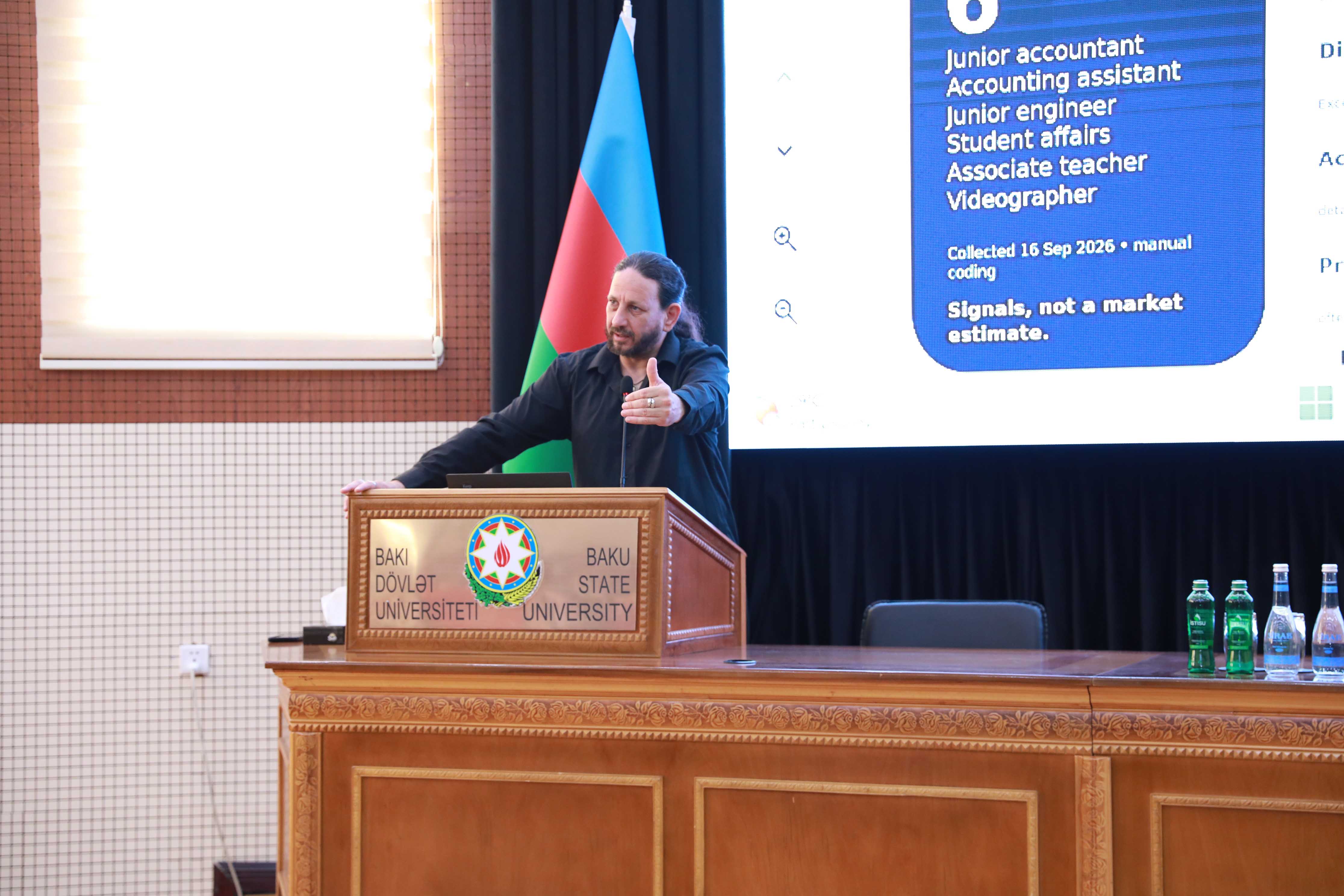
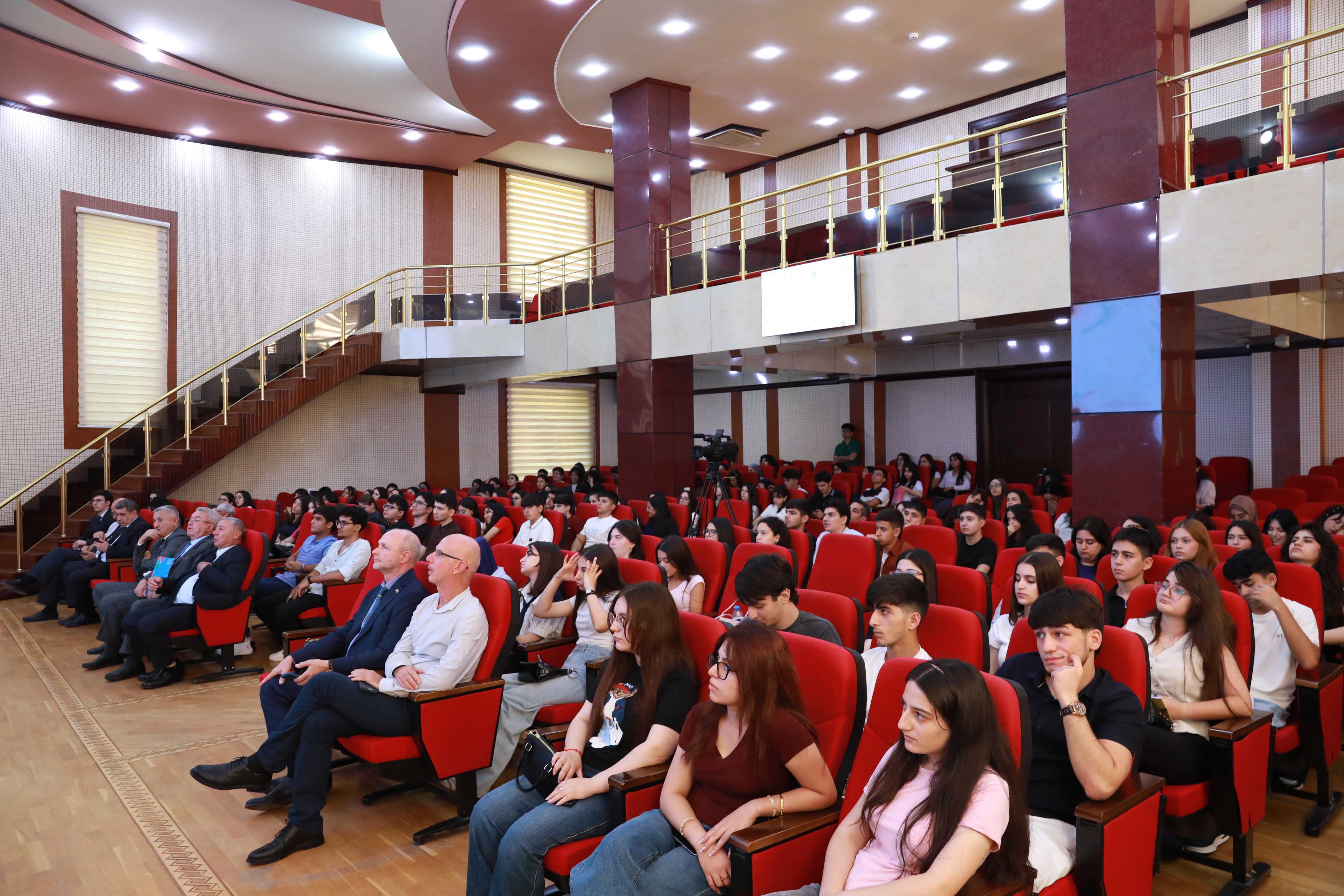
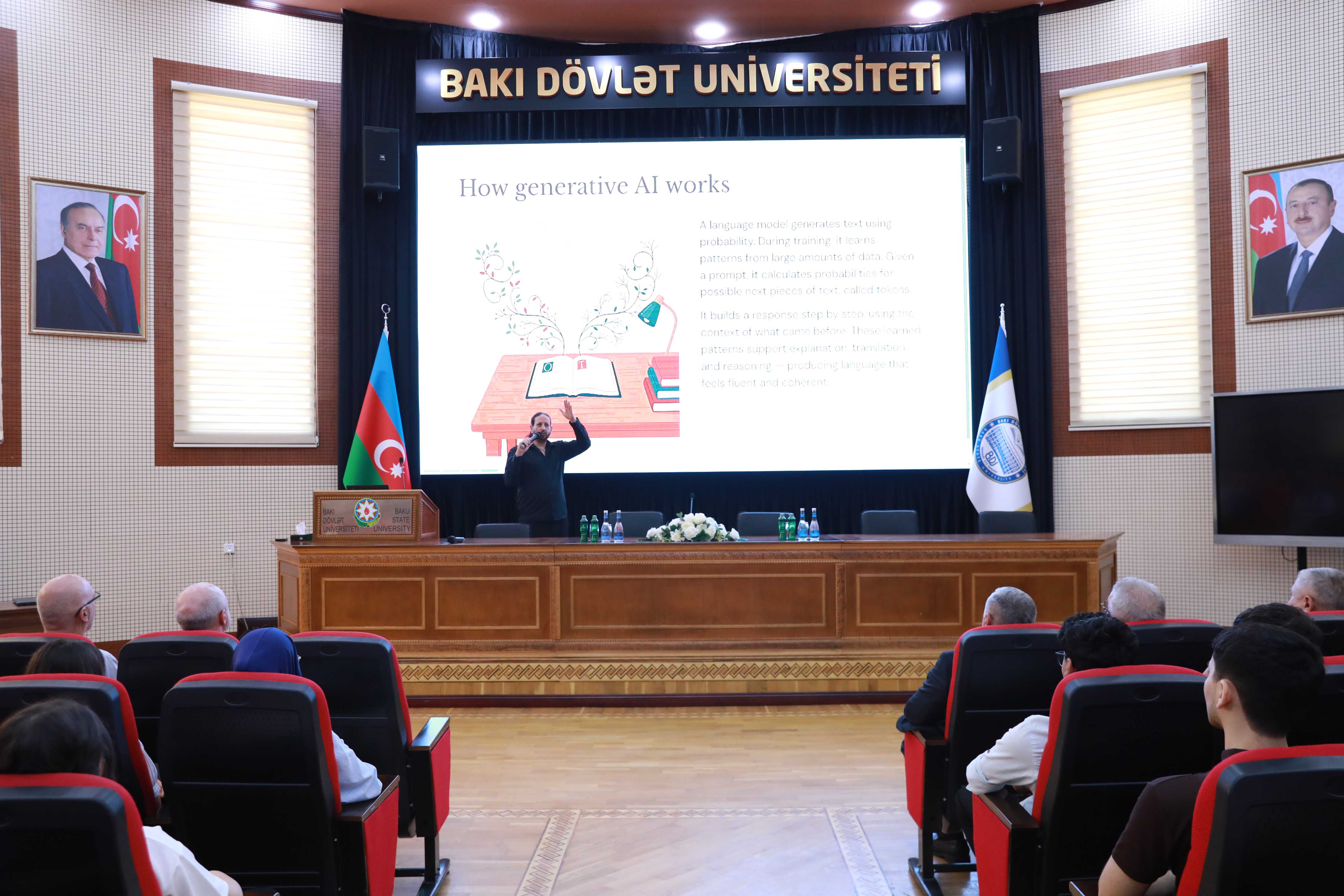
Idan Shavit, Head of Artificial Intelligence Integration in Education at the Kaye Academic Education College in Israel and a researcher with the University of Oxford’s AI in Education project, delivered a lecture to students at Baku State University (BSU) on “Practical Applications of Artificial Intelligence and the Future of Higher Education in the Age of AI.”
Shavit began his presentation by showing an AI-generated video in which a person appeared to speak another language using their own appearance and voice. He noted that artificial intelligence can perform a wide range of tasks in a short period of time that previously required specialised skills.
The speaker emphasised that language models generate responses based on probabilities, meaning that information that appears convincing may nevertheless be inaccurate. During the lecture, he demonstrated several practical applications, including analysing a photograph of a classroom, exploring connections between research papers using NotebookLM, and preparing a presentation with an AI agent. He stressed that evaluating and improving AI-generated results remains a human responsibility.
Shavit also addressed the use of artificial intelligence in education. He noted that 95% of undergraduate students use AI in their studies. According to the speaker, AI systems specifically designed for educational purposes can improve learning outcomes, while unrestricted use may weaken students’ ability to work independently. He stressed that the key issue is not the technology itself, but how assignments are designed and how students’ thinking and learning processes are supported.
The lecture also explored the ethical dimensions of AI use. Shavit highlighted the importance of establishing ethical principles for capabilities such as voice and image imitation, as well as for the processing of personal data. He noted that verifying information, disclosing the use of AI, and protecting confidential data are important components of academic responsibility.
Concluding his presentation, Shavit emphasised the role of educators as mentors who guide students’ interest towards research and highlighted the importance of universities creating institutional conditions for the effective and ethical use of AI. He noted that the development of artificial intelligence requires higher education institutions to reconsider approaches to teaching, assessment, and learning.
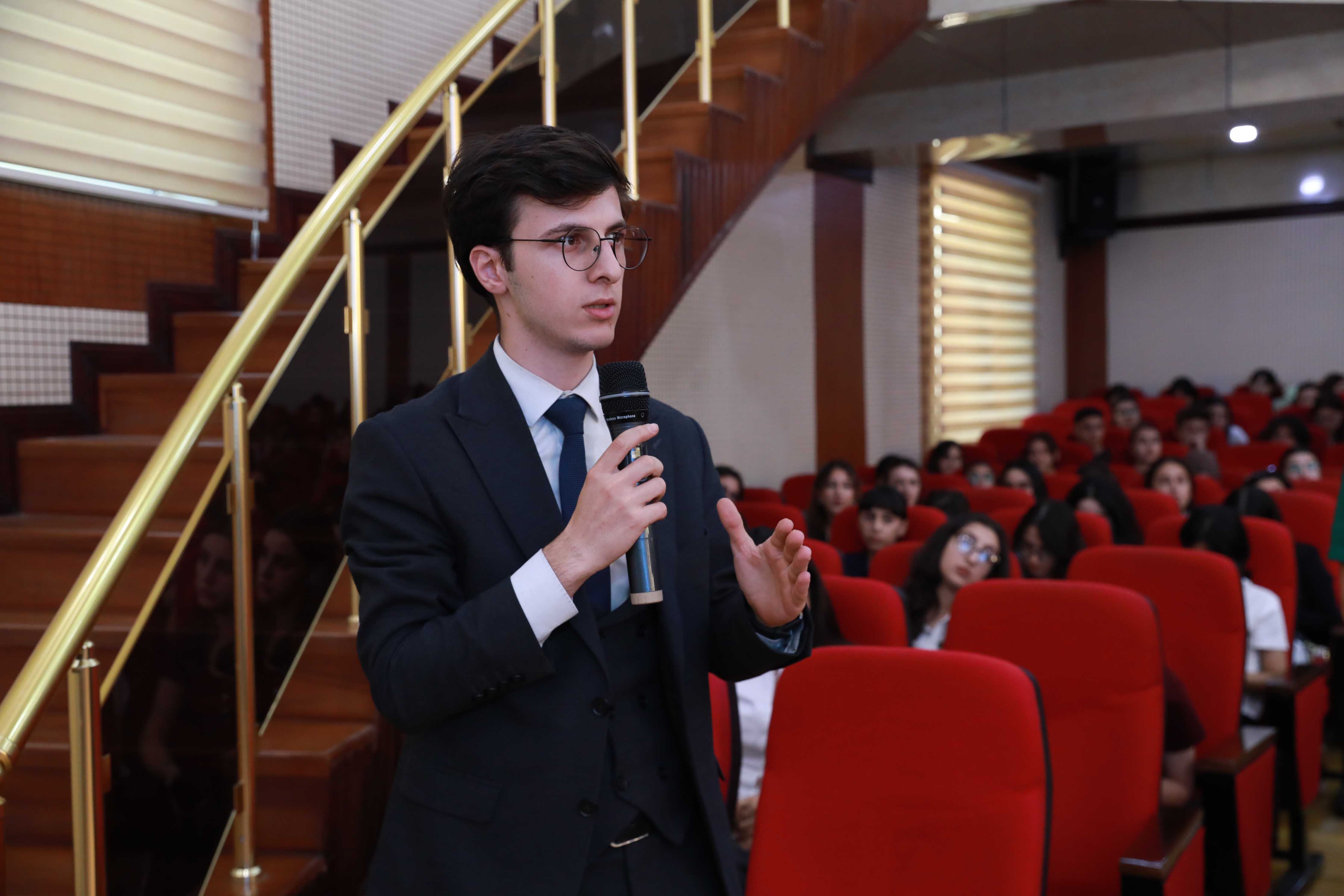
The lecture concluded with a question-and-answer session.
_12.jpg)
_10.jpg)
_3.jpg)