Azerbaijan’s Energy Policy Discussed at BSU Seminar
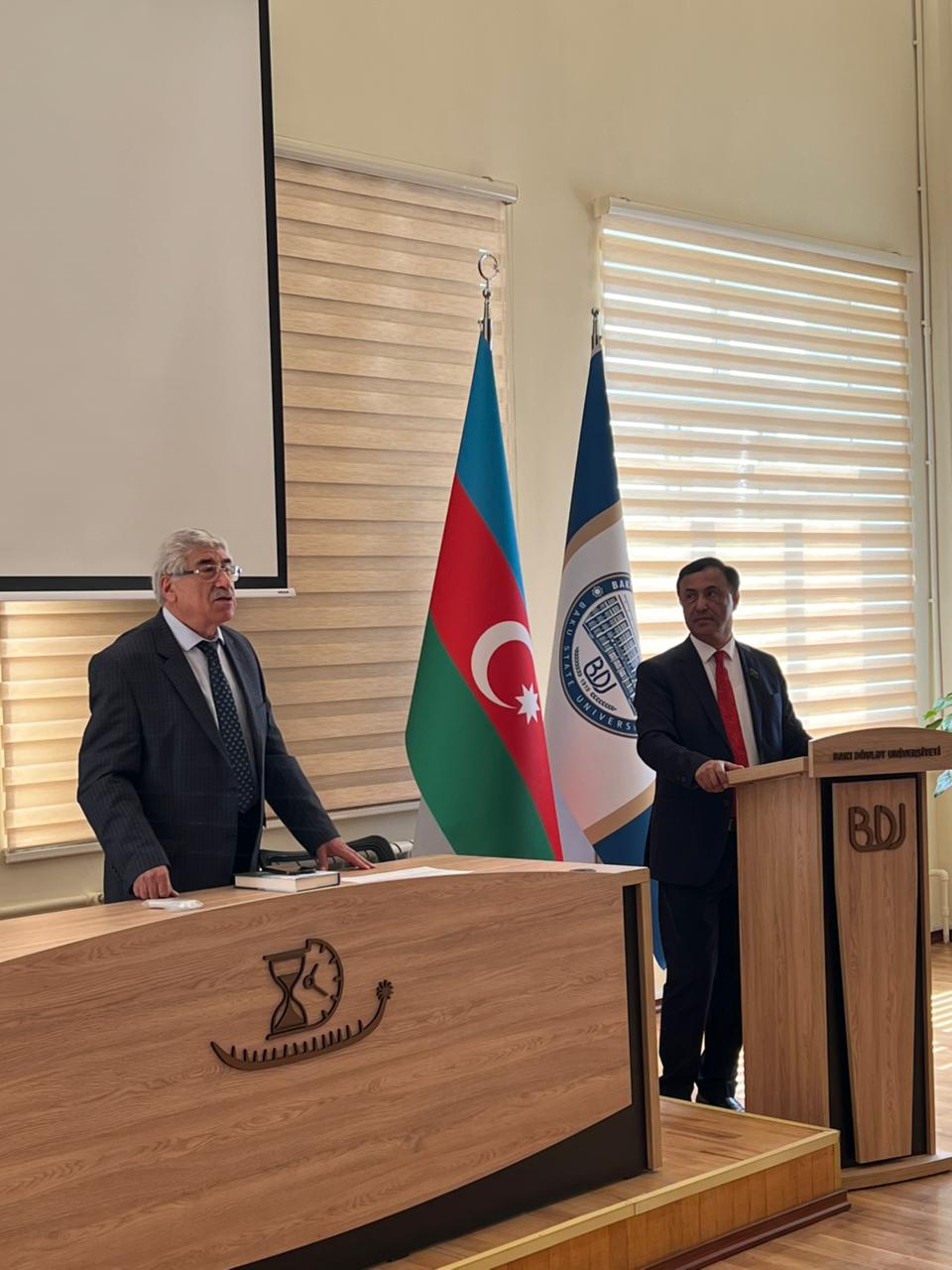
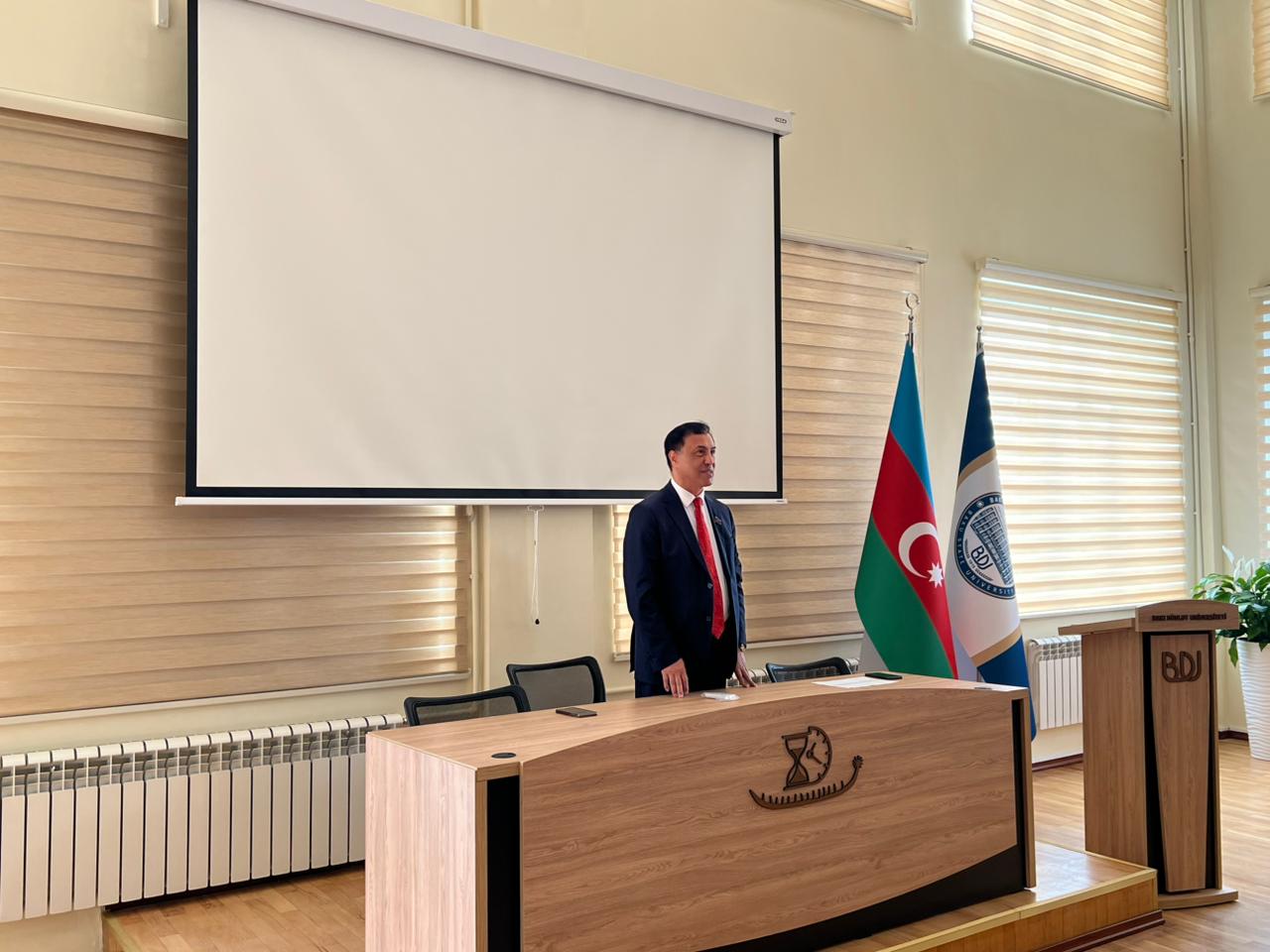
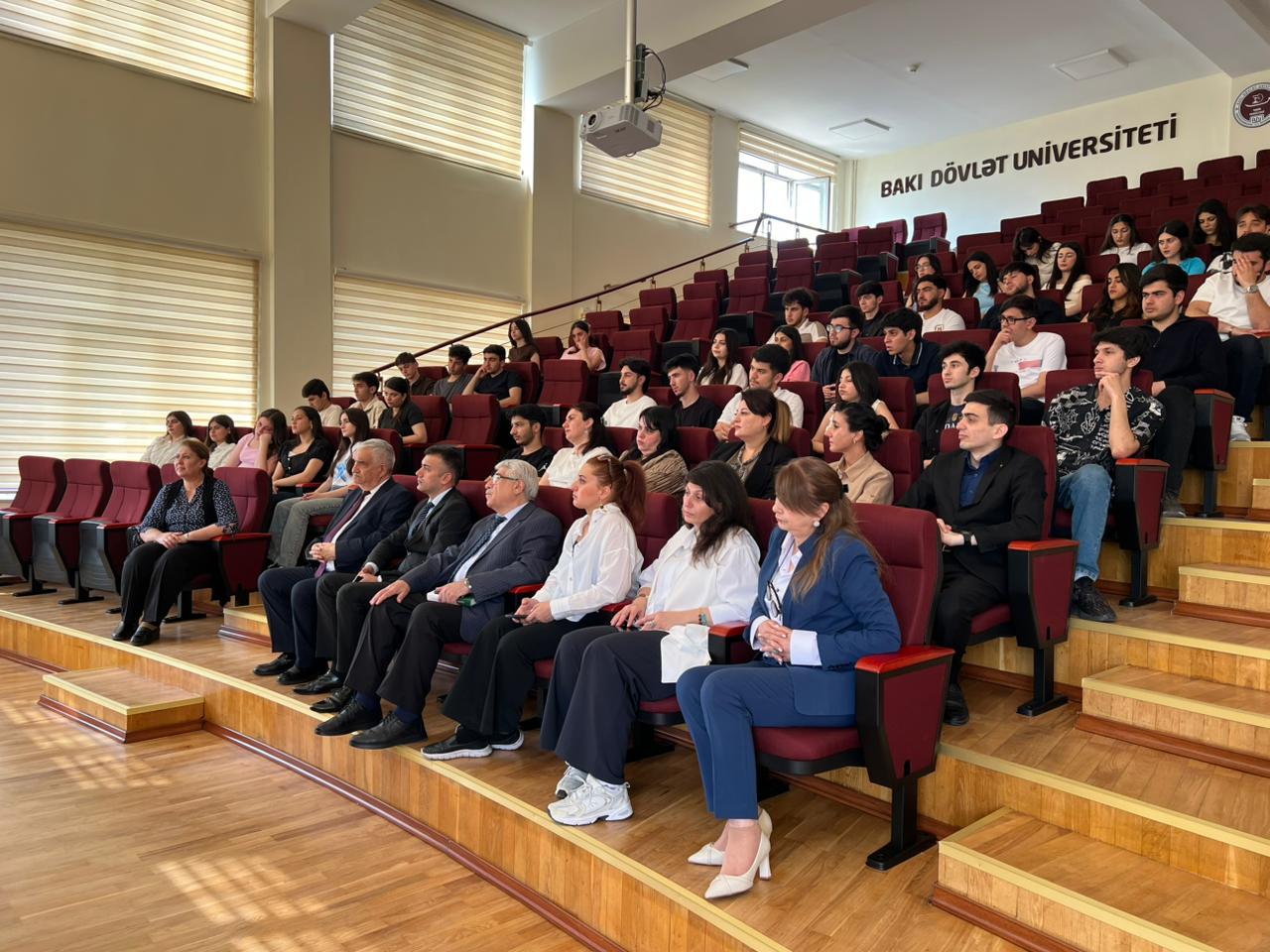
A scientific seminar titled “Energy Policy of the Republic of Azerbaijan: Transition from Traditional to Green Energy” was held at the Faculty of History of Baku State University under the leadership of Member of the Milli Majlis and Professor Elman Nasirov.
Opening the seminar, Dean of the Faculty Ibrahim Zeynalov noted that energy security remains one of the key components of national security in the modern system of international relations. He briefed participants on the main priorities of Azerbaijan’s energy policy, emphasizing that the effective management of energy resources and their secure delivery to global markets significantly influence the economic and political development of states.
In his address, Professor Elman Nasirov stated that Azerbaijan’s oil strategy laid the foundation for the country’s energy security. He noted that the “Contract of the Century,” signed in 1994, marked the beginning of a new stage in Azerbaijan’s economic development and accelerated the country’s integration into the global energy market. As a result, major international energy projects such as the Baku–Tbilisi–Ceyhan pipeline, the Baku–Tbilisi–Erzurum pipeline, and the Southern Gas Corridor were implemented. According to the speaker, these projects have gained strategic importance in ensuring the energy security of both Azerbaijan and Europe.
The seminar also highlighted that global climate change, increasing environmental concerns, and growing interest in renewable energy sources have led to the emergence of new approaches in energy policy. In this context, Azerbaijan has identified green energy development as one of its strategic priorities alongside traditional energy policy. Participants noted that the expansion of renewable energy resources and the development of relevant infrastructure currently occupy an important place in the country’s energy security agenda.
Professor Nasirov emphasized that special attention is being paid to the development of renewable energy sources, noting Azerbaijan’s significant solar, wind, and hydropower potential. He underlined that the declaration of the Karabakh and East Zangezur economic regions as “green energy zones” represents an important step in this direction. It was noted that environmentally friendly energy projects implemented in the liberated territories contribute both to regional restoration efforts and sustainable development.
During the seminar, it was also stressed that Azerbaijan is actively involved in international green energy cooperation projects. Participants noted that the wind energy potential of the Caspian Sea creates broad opportunities for exporting alternative energy to European markets. In recent years, important initiatives have included the establishment of green energy corridors linking Azerbaijan with Georgia, Bulgaria, and Hungary in the west, as well as Kazakhstan and Uzbekistan in the east. According to the speakers, these initiatives are expected to contribute to the formation of a new geopolitical landscape across the Europe–South Caucasus–Central Asia region.
The seminar concluded with discussions and a Q&A session with participants.