BSU Astrophysicists: “A ‘Great Parade of Planets’ to Be Observed on February 28”
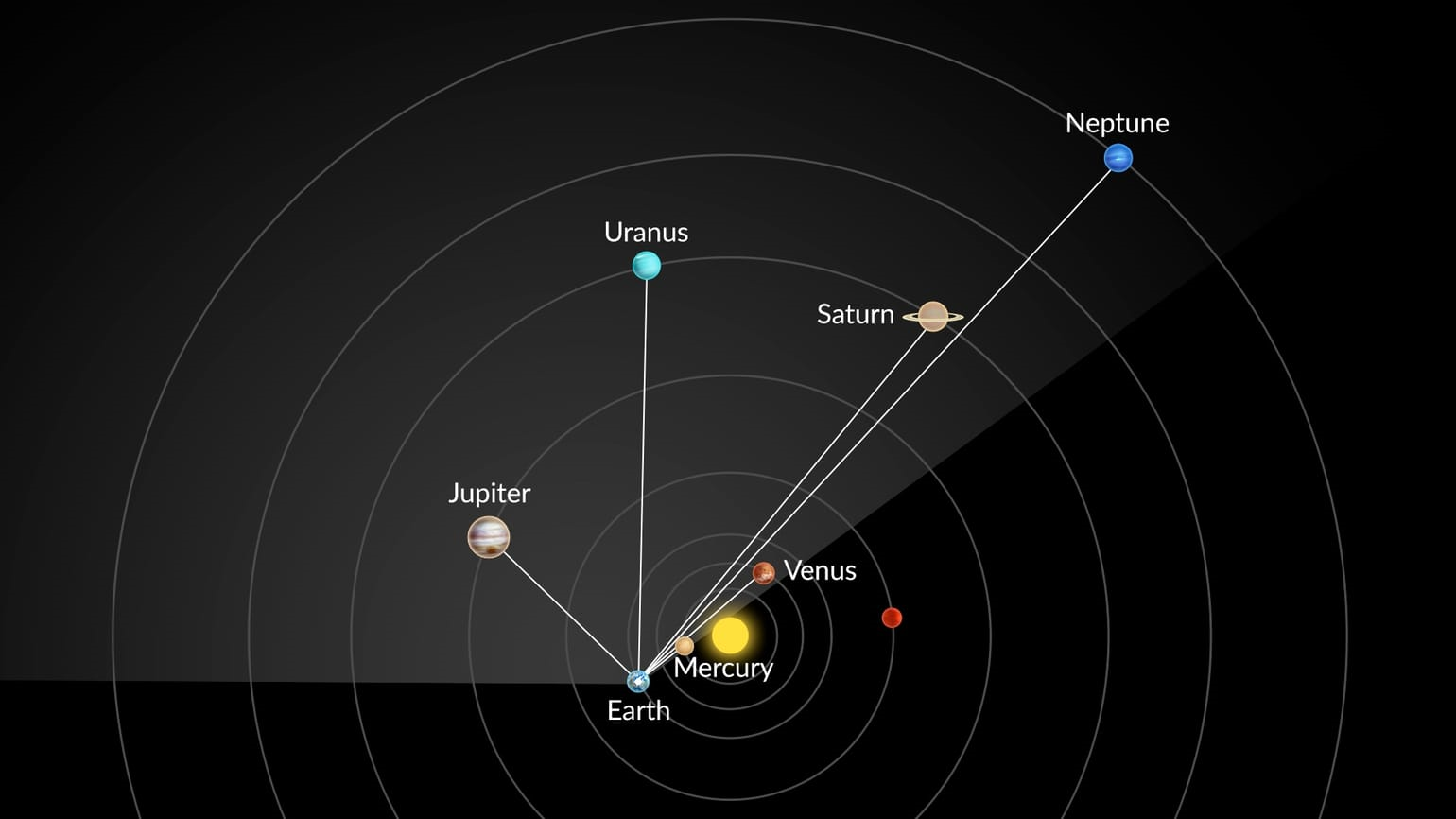
On the evening of February 28, a remarkable astronomical event—the “Great Parade of Planets”—will take place. After sunset, six planets—Mercury, Venus, Jupiter, Saturn, Uranus, and Neptune—will be visible simultaneously in a specific part of the sky.
According to the Department of Astrophysics at the Faculty of Physics of Baku State University (BSU), four of these planets will be visible to the naked eye, while two will require optical instruments. Such events are rare, and their occurrence during evening hours makes them especially attractive for observers.
Venus, one of the brightest planets, along with Jupiter and Saturn, will be easily visible. As Mercury will appear close to the horizon, coastal and rural areas are recommended for better observation conditions. Uranus and Neptune will only be visible with binoculars or a telescope. The most favorable observation time in Baku is approximately from 7:10 p.m. to 8:30 p.m.
In astronomy, “planetary parades” are classified according to the number of participating planets. Parades involving three to four planets are considered minor, five planets moderate, and six or more major.
The simultaneous appearance of six planets on February 28 qualifies this event as a “Great Planetary Parade.” Such phenomena occur on average once every 10 to 20 years and even less frequently under favorable evening conditions.
It should be noted that the planets appear aligned only in sky projection and do not physically approach one another. The “planetary parade” has no gravitational, seismic, climatic, or magnetic effects on Earth and poses no threat to human health or the environment. It is a completely safe and observable astronomical event.