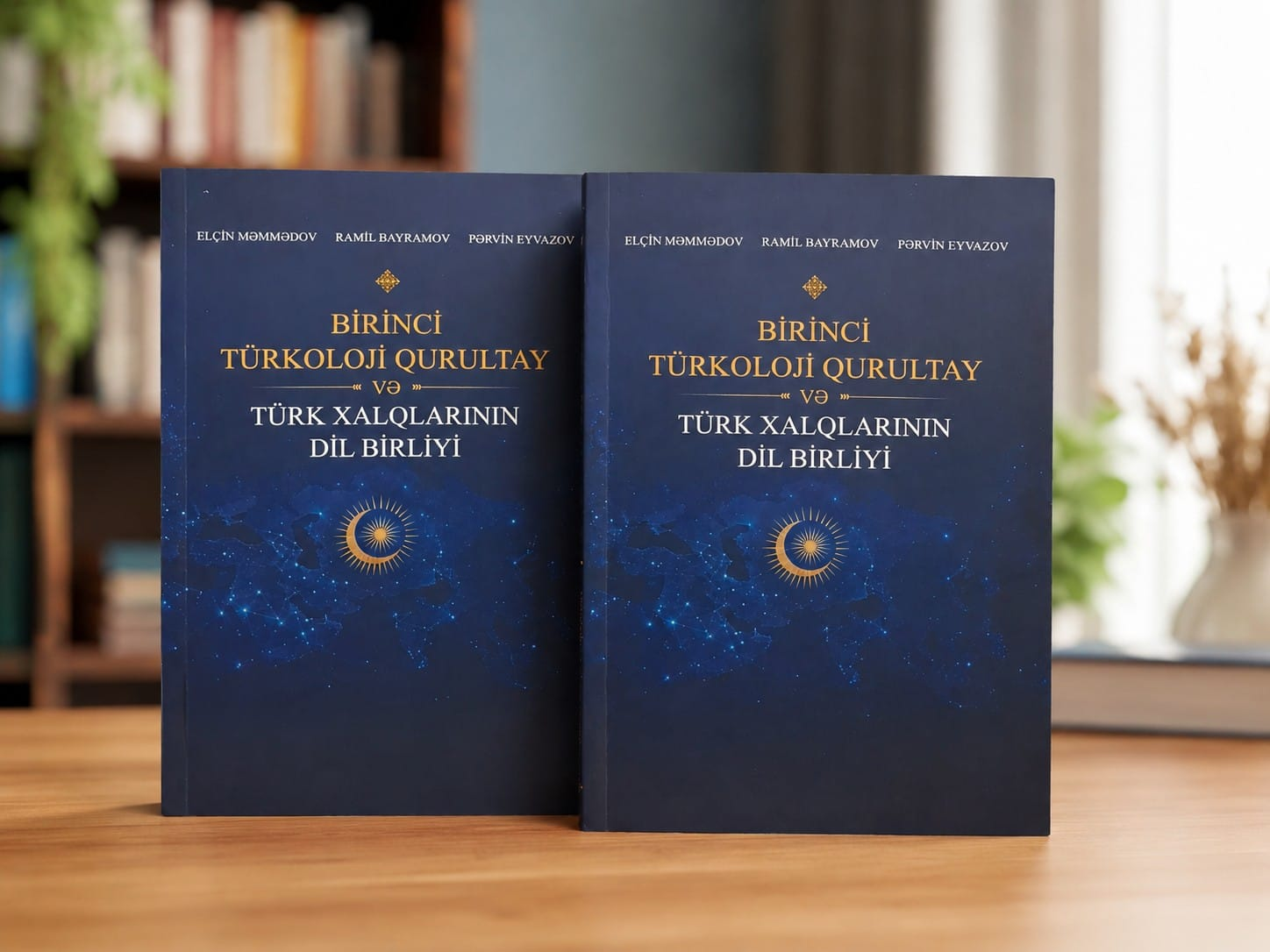
BSU Scholars Publish Monograph on the First Turkological Congress
A monograph entitled "The First Turkological Congress and the Linguistic Unity of Turkic Peoples" has been published, co-authored by Elchin Mammadov, Dean of the Faculty of Philology and Associate Professor of the Department of Methodology of Teaching Azerbaijani Language and Literature at Baku State University (BSU), together with Ramil Bayramov and Parvin Eyvazov, lecturers at the Department of Azerbaijani Linguistics and PhD holders in Philology.
The monograph is dedicated to the 100th anniversary of the First Turkological Congress, held in Baku in 1926, and the 90th anniversary of the birth of the distinguished scholar, recipient of the Shohrat Order, Academician Tofig Hajiyev.
The three-chapter study comprehensively examines the historical role of the First Turkological Congress in the national and spiritual awakening of the Turkic peoples, the advancement of science and culture, and the development of their intellectual thought. It analyzes the alphabet reform within the theoretical and conceptual framework of the transition to a new alphabet, highlighting its contribution to the modernization of the Turkic world. The book also explores the issue of the literary language from the perspective of creating a common Turkic communication space. Drawing on extensive scholarly evidence, the authors demonstrate the significance of the Congress's resolutions in strengthening the linguistic unity and cultural rapprochement of Turkic peoples.
One of the monograph's major contributions is its examination of the First Turkological Congress not only as a historical event but also as a key intellectual platform where the conceptual foundations of the idea of linguistic unity among Turkic peoples were formed. The study makes extensive use of archival documents, the Congress proceedings, periodical publications, and contemporary academic research, all analyzed through modern methodological approaches.
The monograph serves as a valuable academic resource for scholars, faculty members, young researchers, students, and all readers interested in the field of Turkic linguistics.